One might be forgiven for supposing that the idillic, remote coastal village of Salthouse was immune from the hostilities of war during the twentieth century.
It may come as some surprise to learn that a significant number of young Salthouse men and women served their country courageously and paid with their lives.
Some 43 young men living in Salthouse at the time of the Great War (1914-18) were involved in the conflict. Tragically, 13 (ie 30.23%) of them died.
During World War II (1939-45) some 31 men and women from Salthouse served their country in the armed forces. Two of the men paid with their lives (ie 6.45%).
Salthouse also gave up another of its sons during the Korean War (1950-53).
A Grade II listed War Memorial consisting of a limestone cross on a pentagonal base honours the War Dead of Salthouse. This can be found in the churchyard of St Nicholas Church, close to the entrance porch.
The Men of Salthouse who died in The Great War (1914-18)
Edgar F. Cobbold Sydney Leman
Robert H. Cobbold Frank W. Ramm
David Cooke Herbert Wall
Jasper T. Dawson
Thomas N. Dix
Sydney Dix
Edmund P. High
William Hinnells
Brandon Holman
Ernest J. Leman
The Men of Salthouse who died in World War II (1939-45)
Philip J. Dawson
Stanley Holman
The Korean War (1950-53)
Herbert W. Graveling
The loss of Lancaster B3, LM720 and crew at Bard Hill, Salthouseon 15 January 1945
At 16.30 hours on Sunday 14 January 1945, Lancaster B3, LM720 took off from Skellingthorpe, Lincs on a mission to bomb an oil refinery in East Germany. The aircraft was one of 573 Lancaster’s and 14 Mosquitos who participated in two raids.
Having completed its mission, the Lancaster set course for home, but during the course of its return journey there was a deterioration in the weather and poor wireless transmission. The crew was therefore advised to divert to Carnaby Airfield near Bridlington, Yorkshire where there were extra wide and long runways. However, for some unknown reason the aircraft headed for Langham Airfield which was close to the North Norfolk Coast, a couple of miles south west of Salthouse.
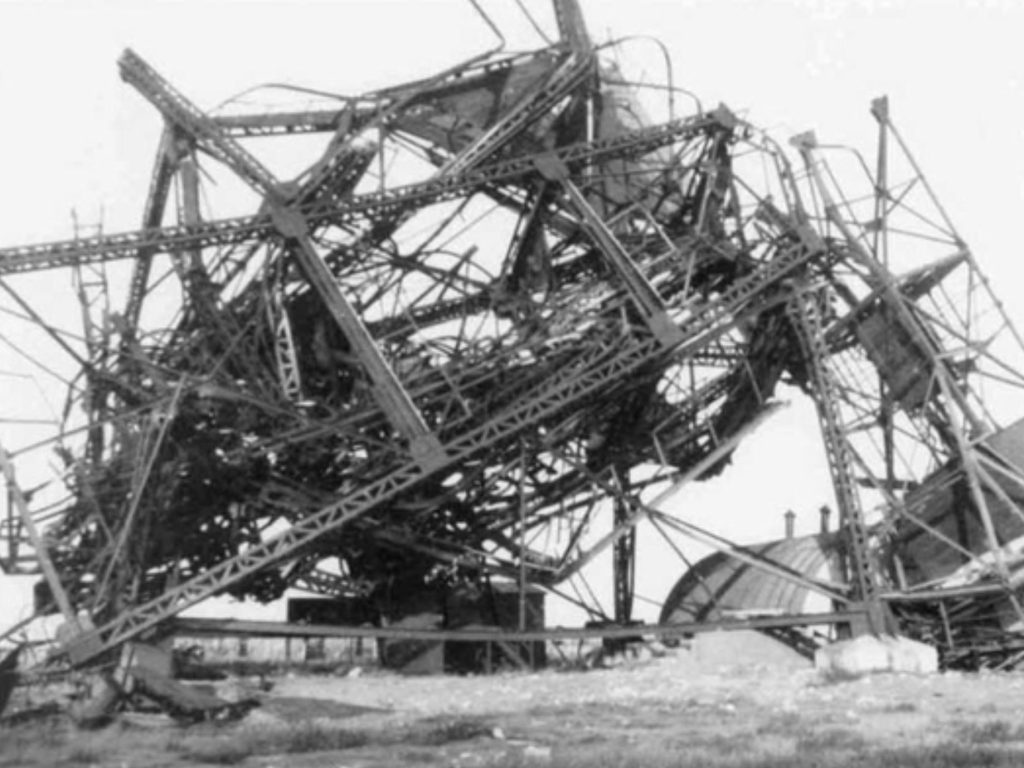
At 01.21 on Monday 15 January 1945, as the aircraft descended over Salthouse Heath in poor visibility en route to Langham, it struck a 200 foot steel radar mast. Its seven crew members (the eldest being 24 years of age) were all killed.
The radar mast partially collapsed on to a Nissan Hut in which Radar Operators were working. Miraculously, none of the Radar Operators were injured.
The remnants of the old Radar Station (see below) and mast can still be seen on Salthouse Heath.
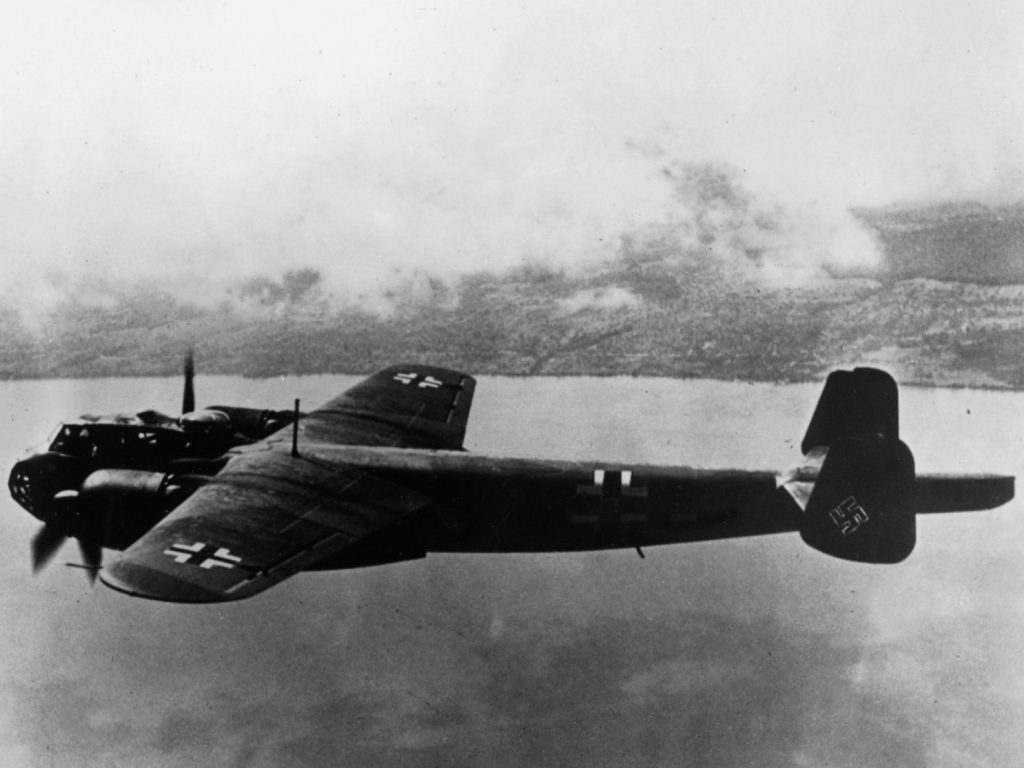
The bombing of the Boston Trader and the downing of a German Dornier Do 217
The Boston Trader was a Coaster based at Great Yarmouth.
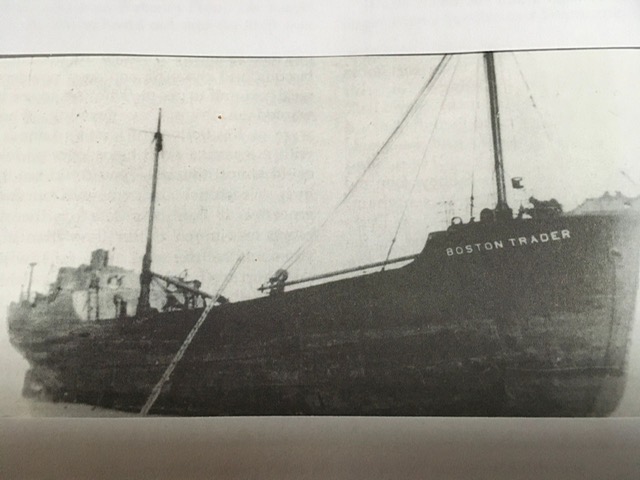
On 9 February 1940 the vessel was at sea off Gramborough Hill, Salthouse, when it was attacked and set on fire by a German Dornier 215, a light bomber which was also used for aerial reconnaissance.
The incident was witnessed by several Salthouse residents, including two young ladies who were at the bottom of Grout’s Lane, which leads up to St
Nicholas Church from the Coast Road. They recalled seeing a very low flying aeroplane bearing a swastika which flew over them and out to sea where they saw it drop two bombs which landed in the sea either side of a ship which reared out of the water.
The incident was also seen by another local resident who was up on Salthouse Heath from which it is possible to look down on to the sea. He saw the Boston Trader being bombed and raked with machine-gun fire. He recalled the vessel ‘zig-zagging’ in a rough sea trying to avoid being hit. Part of the coaster caught on fire.
Eventually, seven crew members were taken off the vessel by the Sheringham Lifeboat and the unmanned vessel was allowed to drift along the coast where it came ashore at Blakeney Point. The rough sea apparently extinguished the fire and the vessel was eventually salvaged and repaired.
Two years later, on the night of 30 July 1942, a Dornier 217 was shot down over Salthouse Marshes by the crew of 68 Fighter Squadron based at Coltishall. A photograph of the wreck of the Dornier 217 forms part of this exhibition.